
Wausau, WI · Garage Door Service
Deciding If Your Wausau Garage Door Still Has Life Left
Wausau's housing stock runs 1955-2000, mostly 1960s-70s builds, and the cold hits hardware hard. Here's how to tell a worn door from one you should replace.
- Repairs & new doors
- Springs & openers
- Serving 6 nearby communities
What Local Conditions Do
Most houses around Wausau went up between 1955 and 2000, with the median build year landing around 1979, and across the 21 named areas we work in the stock skews hard toward 1960s and 70s construction. That matters because doors and openers from that era were built for a different climate expectation than what we actually get here. Wausau sits in a severe cold band, and a severe cold band means repeated freeze-thaw cycling on steel panels, on track bolts, and on the galvanized coating that's supposed to keep rust off cable and hinges. A door that's 40-plus years old has been through four or five decades of that cycling already. The hardware doesn't fail all at once - it fails one bolt, one hinge, one spring cycle at a time, and by the time you notice it's usually further along than it looks. If your house is one of the older ones in this stock, the question isn't whether the door has taken cold-weather wear, it's how much is left before the next big swing in temperature finds the weak point.
What to Look At First
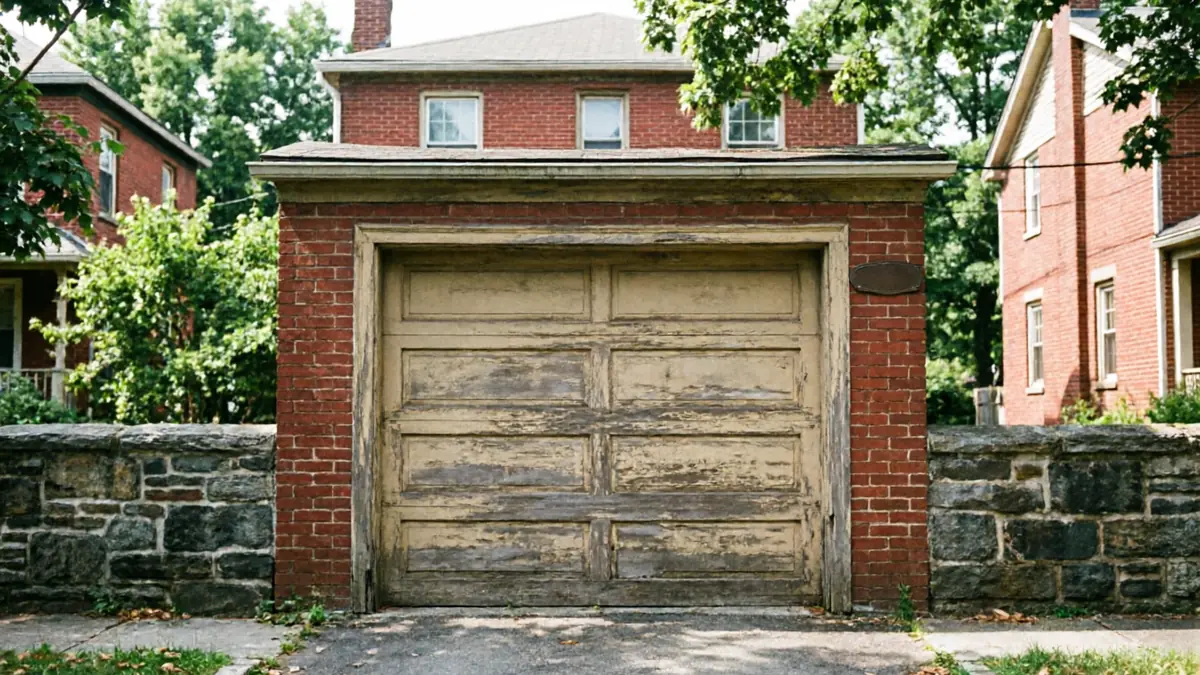
Start with the springs and the track, since those are the two things cold punishes fastest in a house this age. Torsion springs lose tension gradually, and on an older door built before some of today's spring-sizing standards, a spring that's even slightly undersized for the panel weight will show it first on a cold morning - the door will feel heavier at the bottom of its travel than it should. Check the track for rust pitting at the brackets, especially if the door faces north or sits in a shaded part of the lot; galvanized coating thins over 40-plus years of freeze-thaw and the steel underneath starts to go. Look at the bottom panel too. Wood-composite bottom panels from the 1960s-70s builds absorb moisture at the seam and swell, and once that panel's out of square the whole door binds in the track. None of this is a weekend project to diagnose by feel - a torsion spring under tension is not something to loosen yourself.
Leaving It Alone
A door that's stiff in cold weather but still opens and closes square is worth leaving alone for now. Not every symptom on an older door is a replace-it signal - sometimes it's just cold grease in the rollers, which loosens up once the temperature comes back above freezing. If the door is from the 1960s-70s stock and the panels are still straight, the track is still plumb, and the only complaint is noise, that's a lubrication and hardware-tightening job, not a teardown. I'll say the honest limit here: I don't do cosmetic panel repair on doors old enough that the manufacturer no longer makes a matching panel. If one section is dented but the rest of the door is sound, sometimes the right call is to live with the dent rather than replace a whole door that still has years in it.
The Problem
The problem shows up when two things stack: age and this climate band together. A door built in the median 1979 window has had roughly four and a half decades of severe cold cycling on its hardware, and across the service area - 28,786 households, 17,093 of them owner-occupied houses - a meaningful share of that housing falls right in this window. At some point the steel fatigue in an old torsion spring, the rust at the track brackets, and a swollen bottom panel stop being three separate small problems and become one door that's no longer safe to operate on its own weight. That's the point where fixing it piece by piece costs more than a full door and opener replacement, and where I'll tell you straight that the repair isn't worth it anymore. Median household income in this area runs $84,375, which is worth knowing when you're weighing a $150 spring job against a full replacement - the math usually favors fixing until the frame or track itself is compromised.
Frequently asked questions
How old does a garage door have to be before replacement beats repair?
There's no fixed year, but once a door from the 1960s-70s stock has rust at the track brackets, a swollen bottom panel, and a spring that's clearly undersized, you're usually past the point where single fixes add up to less than a new door. Houses built closer to the 1979 median tend to hit this combination around the same time.
Why does my door feel heavier in winter?
Cold grease in the rollers and torsion tension dropping slightly with temperature both play a part, but on an older door it's also the spring itself losing capacity after years of freeze-thaw cycling. If it's only heavy on the coldest mornings, that's different from a door that's heavy all the time.
Is it worth fixing a dented panel on an old door?
Sometimes, sometimes not. If the panel still seals and the door runs square, I'd rather leave a cosmetic dent than replace an otherwise sound door - especially if it's old enough that a matching replacement panel isn't available.
Related garage door services in Wausau
More garage door guides
Book garage door service in Wausau
Call now or request a quote - tell us what the door is doing and where you are.